Chemical Peels in Brampton | Winter Skin Rejuvenation Guide
Chemical Peels in Brampton: Why Winter May Be a Good Time to Refresh Your Skin
Winter can be a good opportunity to review your skincare routine and explore professional skin rejuvenation treatments. During the colder months, many people notice changes in their skin, including dryness, rough texture, uneven skin tone and a dull-looking complexion.
If you are considering improving the appearance of your skin, a chemical peel may be one treatment worth exploring.
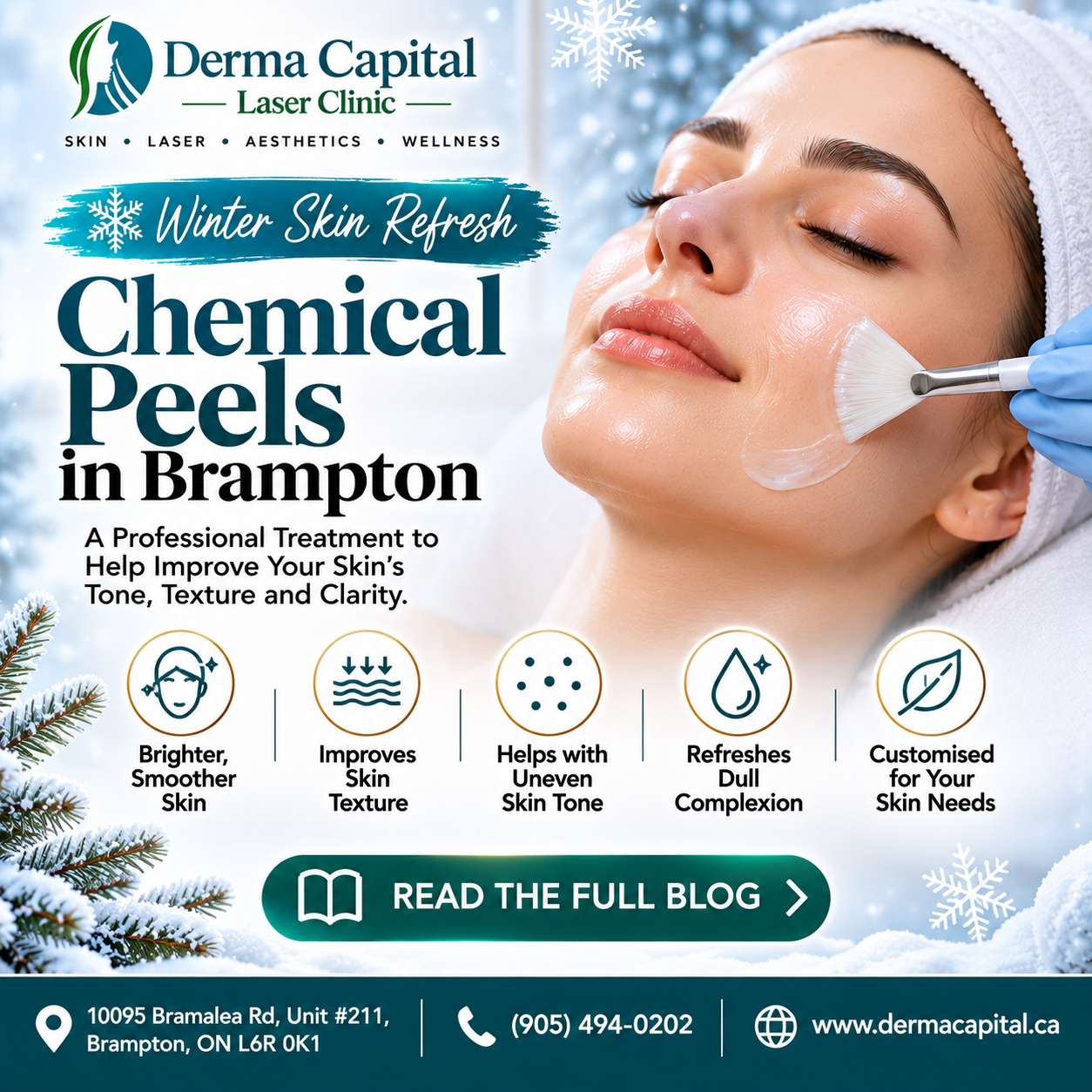
At Derma Capital Laser Clinic in Brampton, chemical peels are offered as a skin-resurfacing treatment designed to improve the appearance of skin tone, texture and clarity.
But what exactly is a chemical peel? Is winter a suitable time to consider one? How many treatments might you need, and what should you expect during recovery?
In this guide, we explain the different types of chemical peels, their potential cosmetic benefits, treatment considerations and how to care for your skin after a procedure.
Why Consider a Chemical Peel During Winter?
Winter is not automatically the best season for every chemical peel, but it may be a convenient time for some people to plan treatment.
There are several reasons people consider skin-resurfacing treatments during the colder months.
1. More Opportunity to Plan Your Skincare Treatments
Chemical peels can require recovery time, depending on the type and depth of treatment.
Starting with a consultation during winter gives you an opportunity to discuss your skin concerns, understand the treatment options and plan around your personal schedule.
2. An Opportunity to Address Uneven Skin Tone
Sun exposure, ageing, acne and other factors can contribute to visible pigmentation and uneven skin tone.
Depending on the type of pigmentation and your skin characteristics, a professionally selected chemical peel may help improve the appearance of certain superficial discoloration concerns.
3. Improve the Appearance of Rough Skin Texture
Dead skin cells can accumulate on the skin’s surface and contribute to a rough or dull appearance.
Certain chemical peels exfoliate controlled layers of the skin, helping reveal fresher-looking skin as it heals.
4. Prepare a Personalised Skincare Plan
Winter is also a useful time to review your current skincare products, sun protection habits and treatment goals.
A professional consultation can help determine whether a chemical peel is appropriate or whether another treatment would better suit your concerns.
Important: Skin remains sensitive to ultraviolet radiation after a chemical peel. Winter does not eliminate the need for sunscreen, and treatment should be postponed if your skin is not suitable.
What Is a Chemical Peel?
A chemical peel is a professional skin-resurfacing procedure that uses a selected chemical solution to exfoliate controlled layers of the skin.
Depending on the formula and treatment depth, a chemical peel may help improve the appearance of:
- Uneven skin tone
- Certain types of pigmentation
- Fine lines
- Rough skin texture
- Selected acne-related concerns
- Sun-damaged-looking skin
- Dull complexion
Different chemical peels work at different depths. The appropriate treatment depends on your skin type, concerns, medical history and expected recovery time.
A chemical peel should always be selected and performed by an appropriately qualified professional.
What Are the Different Types of Chemical Peels?
Chemical peels are generally classified according to how deeply they penetrate the skin.
At Derma Capital Laser Clinic, three categories are described: superficial, medium and deep peels.
1. Superficial Chemical Peel
A superficial peel works on the outermost layer of the skin.
These treatments commonly use alpha-hydroxy acids (AHAs), such as glycolic or lactic acid, depending on the product and protocol.
Potential cosmetic uses include:
- Mild uneven skin tone
- Dull-looking complexion
- Rough surface texture
- Selected mild discoloration concerns
Superficial peels generally involve less recovery time than deeper peels, although temporary redness, dryness and flaking can still occur.
2. Medium Chemical Peel
A medium-depth peel penetrates further into the skin than a superficial peel.
Depending on the formulation, ingredients may include glycolic acid or trichloroacetic acid (TCA).
These treatments may be considered for selected concerns such as:
- More noticeable pigmentation
- Certain sun-damage changes
- Fine lines
- Uneven skin texture
- Selected acne-related marks
Recovery is generally longer than with a superficial peel. Redness, peeling and sensitivity may continue for several days or longer, depending on the treatment.
Medium-depth peels require careful patient selection and appropriate professional oversight.
3. Deep Chemical Peel
Deep chemical peels penetrate significantly further into the skin and involve a more intensive procedure.
They may use stronger agents, such as phenol or higher-strength TCA, and have a substantially longer recovery period and greater potential risks.
Deep peels are not routine lunchtime facials. They require specialist assessment, appropriate medical supervision and careful consideration of risks, medical history and aftercare.
Not everyone is a suitable candidate, and they should not be selected simply because a person wants more dramatic cosmetic results.
What Skin Concerns Can Chemical Peels Help Improve?
The potential benefits depend on the peel formulation, depth, skin condition and individual response.
Pigmentation and Uneven Skin Tone
Some superficial pigmentation concerns may improve with an appropriately selected peel.
However, pigmentation has different causes. Melasma, post-inflammatory hyperpigmentation and sun-related spots require different considerations.
A professional assessment is important, particularly for darker skin tones, because unsuitable treatments can worsen pigmentation.
Acne and Acne-Related Marks
Some chemical peels may help improve the appearance of selected acne-related concerns and superficial post-acne discoloration.
Active acne, inflamed skin and acne scarring may require different treatments. A chemical peel does not guarantee removal of established acne scars.
Fine Lines and Early Signs of Ageing
Selected superficial and medium-depth peels may improve the appearance of certain fine lines and surface irregularities.
Results depend on the depth of the peel and the individual’s skin condition.
Rough and Uneven Skin Texture
Exfoliation can help improve the appearance of rough surface texture by removing controlled layers of dead skin cells.
The amount of improvement varies with the treatment and skin response.
Is a Chemical Peel Suitable for Every Skin Type?
No. Chemical peels are not suitable for everyone, and the choice of peel needs to be individualised.
Skin tone, pigmentation history, sensitivity, current skin conditions and medical history all matter.
People with darker skin tones may be at greater risk of post-inflammatory hyperpigmentation from an unsuitable peel or treatment depth. Appropriate experience and careful treatment selection are especially important.
A peel may need to be postponed or avoided if you have:
- Active skin infections
- Open wounds or significant irritation
- Certain inflammatory skin conditions
- Recent sunburn or tanning
- A history of abnormal scarring
- Certain medication or skincare-related contraindications
Tell your provider about all medications, topical products, previous cosmetic procedures and any history of cold sores or unusual reactions.
What Happens During a Chemical Peel Appointment?
If you are considering a chemical peel in Brampton, understanding the general appointment process can help you prepare.
Step 1: Skin Consultation
Your provider discusses your concerns, skincare routine, medical history and treatment goals.
Your skin is assessed to determine whether a chemical peel is appropriate and which depth may be suitable.
Step 2: Skin Preparation
Depending on the treatment, your skin may be cleansed and prepared before the chemical solution is applied.
Follow any preparation instructions provided by your clinic.
Step 3: Application of the Chemical Solution
The selected chemical solution is applied according to the treatment protocol.
You may experience temporary tingling, warmth or stinging. Your provider should explain what sensations are expected and what to report immediately.
Step 4: Completion of Treatment
The solution is managed according to the specific peel protocol. Some formulations require removal or neutralisation, while others are designed to remain on the skin for a specified period.
Step 5: Aftercare Instructions
Your provider explains how to care for your skin, what products to avoid and when you can return to your regular skincare routine.
The procedure and appointment length vary according to peel type.
Chemical Peel Recovery: What Should You Expect?
Recovery depends largely on the depth of the chemical peel.
After a Superficial Peel
You may experience:
- Mild redness
- Temporary dryness
- Light flaking
- Mild sensitivity
Some people experience little visible downtime, but individual responses vary.
After a Medium Peel
Possible effects include:
- More noticeable redness
- Swelling
- Skin peeling
- Temporary sensitivity
- A longer period of skin recovery
Your provider should explain the expected recovery period before treatment.
After a Deep Peel
Deep peels involve more significant recovery and may require specialised wound care and follow-up.
They can carry greater risks, including infection, scarring and persistent pigmentation changes.
Never pick, pull or peel skin that is shedding after a chemical peel. Allow the skin to heal according to your provider’s instructions.
Chemical Peel Aftercare: How to Protect Your Skin During Winter
Aftercare is an important part of the treatment process.
Freshly treated skin may be more sensitive and needs appropriate protection while it heals.
1. Use Gentle Skincare Products
Avoid harsh cleansers, abrasive scrubs and irritating products until your provider advises that they can be safely resumed.
2. Apply a Suitable Moisturiser
Use the moisturiser recommended for your skin and peel type to help maintain comfort and hydration.
3. Protect Your Skin From Sun Exposure
Sun protection is essential after a chemical peel, even during winter.
Use a broad-spectrum sunscreen with SPF 30 or higher as advised, and follow instructions about reapplication and additional sun protection.
4. Avoid Picking or Scrubbing
Do not pull off peeling skin or try to speed up exfoliation.
Allow the skin to recover naturally.
5. Pause Strong Active Ingredients
Products containing retinoids, exfoliating acids or other potentially irritating ingredients may need to be paused before and after treatment.
Only restart them when your provider confirms that your skin is ready.
6. Follow Your Individual Aftercare Plan
The correct aftercare depends on the depth and type of peel.
Contact your healthcare provider if you experience severe or worsening pain, increasing swelling, blistering, signs of infection or other concerning symptoms.
How Many Chemical Peel Sessions Do You Need?
There is no fixed number of chemical peel sessions for everyone.
Some people may be suitable for an individual superficial peel, while others may benefit from a series of treatments spaced according to the provider’s recommendations.
The number of treatments depends on:
- The skin concern being addressed
- The depth and formulation of the peel
- Your skin type and sensitivity
- How your skin responds
- Your treatment goals
- Your ability to follow the recommended aftercare
Deeper peels are not simply repeated more frequently for faster results. The treatment plan must take recovery and safety into account.
Your provider can explain what is realistic after assessing your skin.
How Much Does a Chemical Peel Cost in Brampton?
The cost of a chemical peel in Brampton varies depending on the type of peel, treatment depth, products used and the provider’s treatment plan.
Factors that may influence the price include:
- Superficial, medium or deep peel selection
- Treatment area
- Number of appointments
- Products and preparation involved
- Follow-up and aftercare requirements
At Derma Capital Laser Clinic, contact the clinic for current chemical peel pricing and available treatment options.
Before booking, ask what is included in the treatment price, how much recovery time may be needed and whether any additional products or appointments are recommended.
Chemical Peel vs. Hydro Oxygen Facial: Which Should You Choose?
Chemical peels and Hydro Oxygen Facials are different treatments with different purposes.
A chemical peel uses a selected chemical solution to exfoliate controlled layers of the skin. It may be considered for certain concerns involving pigmentation, fine lines and uneven texture.
A Hydro Oxygen Facial is a non-invasive facial treatment designed to cleanse, exfoliate and hydrate the skin.
If your main concern is dry or dehydrated-looking skin, a hydrating facial may be worth discussing.
If your concern involves pigmentation, uneven texture or selected acne-related marks, a chemical peel may be considered after assessment.
Neither treatment is automatically better. The right option depends on your skin, goals, sensitivity and treatment suitability.
Explore our Hydro Oxygen Skin Rejuvenation and other services to learn about available options.
Why Consider Derma Capital Laser Clinic in Brampton?
Derma Capital Laser Clinic offers chemical peel treatments and a range of other skin rejuvenation services in Brampton, Ontario.
Our chemical peel options include superficial, medium and deep categories, with treatment selection and details discussed during consultation.
If you are considering a chemical peel this winter, you can discuss your skin concerns, treatment goals, expected recovery and aftercare requirements with the clinic.
Derma Capital Laser Clinic
Address: 10095 Bramalea Rd, Unit #211, Brampton, ON L6R 0K1, Canada
Phone: (905) 494-0202
Website: https://www.dermacapital.ca/
Explore our Chemical Peels service page for more information.
Frequently Asked Questions About Chemical Peels in Brampton
1. Is winter a good time to get a chemical peel?
Winter may be convenient for planning certain chemical peels because some people find it easier to limit sun exposure. However, UV protection remains essential, and the treatment must be suitable for your skin.
2. How much does a chemical peel cost in Brampton?
Pricing varies according to the peel type, depth, treatment area and provider. Contact Derma Capital Laser Clinic for current pricing.
3. How long does chemical peel recovery take?
Recovery varies significantly. Superficial peels may involve mild redness and flaking, while medium and deep peels can require longer recovery periods.
4. Can chemical peels help with pigmentation?
Some chemical peels may improve selected types of pigmentation. However, the cause of pigmentation must be assessed before treatment because unsuitable peels can make some pigmentation conditions worse.
5. Can chemical peels help acne scars?
Certain superficial marks may improve, but established or deeper acne scars often need other treatments. A consultation can help identify suitable options.
6. Are chemical peels painful?
Some people experience tingling, warmth, stinging or discomfort during treatment. The sensation depends on the formulation and depth of the peel.
7. Can I wear makeup after a chemical peel?
This depends on the peel depth and your skin’s recovery. Follow your provider’s instructions and avoid applying makeup until your skin is ready.
8. Do I need sunscreen after a chemical peel in winter?
Yes. Sun protection remains important throughout the year, particularly after a chemical peel when the skin may be more sensitive to sunlight.
9. Are chemical peels suitable for darker skin tones?
Some peels may be suitable, but careful selection is essential because inappropriate treatment can cause post-inflammatory hyperpigmentation. Seek assessment from an appropriately experienced professional.
10. Can I combine a chemical peel with other facial treatments?
Some treatments may be combined as part of a broader skincare plan, but combining procedures can increase irritation and recovery requirements. Your provider should determine the appropriate timing and sequence.
Refresh Your Skincare Routine This Winter at Derma Capital Laser Clinic
Winter is an opportunity to pay closer attention to your skin and explore professional skincare options.
If you are concerned about uneven skin tone, rough texture, pigmentation or dull-looking skin, a chemical peel may be worth discussing with a qualified provider.
At Derma Capital Laser Clinic in Brampton, we offer different chemical peel options and personalised consultations to help you understand which approach may be suitable for your skin.
Contact us to learn more about chemical peels and current treatment availability.
Derma Capital Laser Clinic
10095 Bramalea Rd, Unit #211, Brampton, ON L6R 0K1
Phone: (905) 494-0202
Website: https://www.dermacapital.ca/
Medical Disclaimer: This article is for general educational purposes and is not a substitute for professional medical advice, diagnosis or treatment. Chemical peels carry potential risks, and suitability depends on individual skin characteristics and medical history. Results and recovery vary. Treatment should be performed by an appropriately qualified professional.