
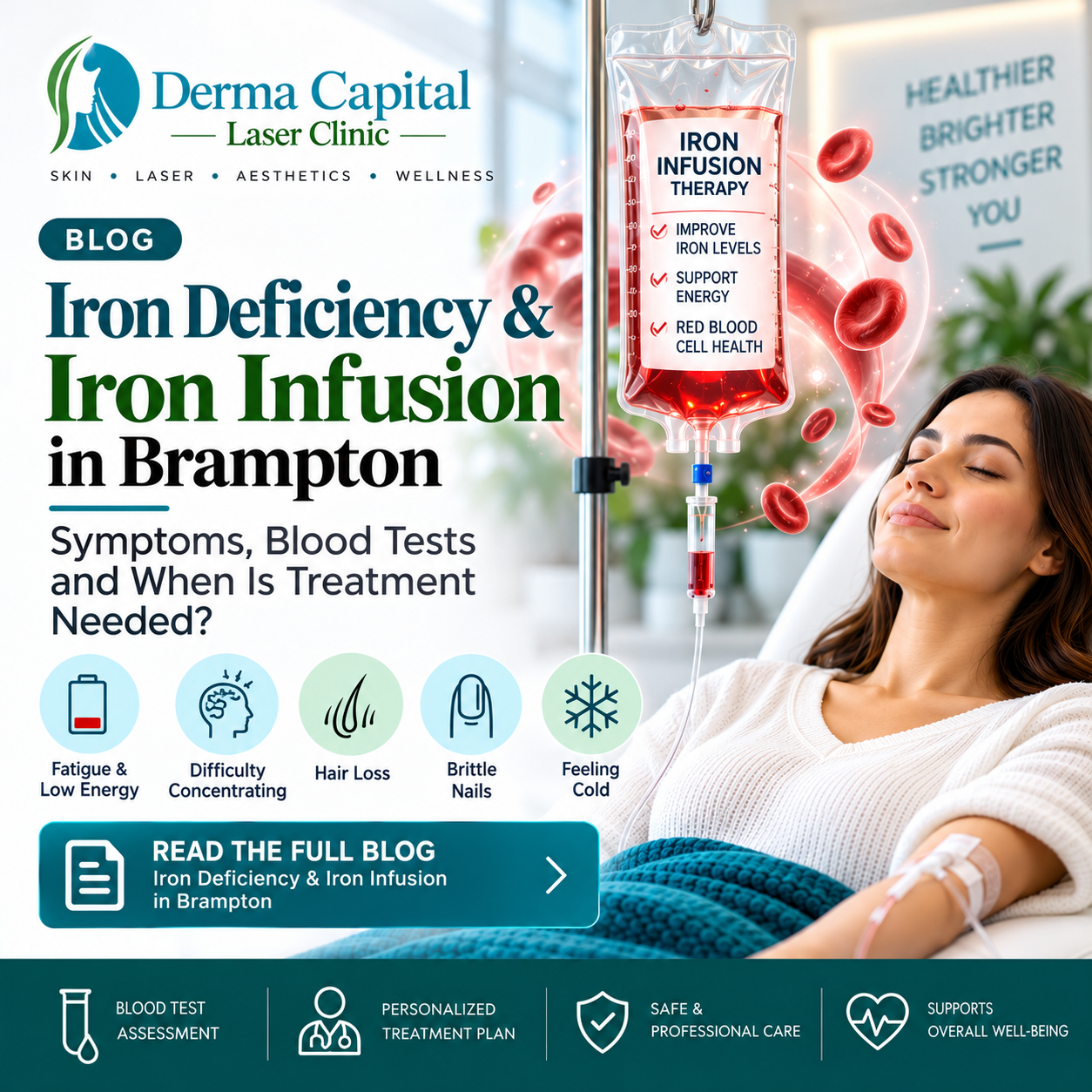
Iron Deficiency & Iron Infusion in Brampton: Symptoms and Treatment
Iron Deficiency Symptoms and Iron Infusion in Brampton: When Is Treatment Needed?
Iron plays an essential role in the body, particularly in the production of haemoglobin, a protein in red blood cells that helps carry oxygen throughout the body. When iron levels become too low, the body may not have enough iron to support its normal functions.
Iron deficiency can develop gradually, and some people may experience symptoms before they are diagnosed with iron-deficiency anaemia. Understanding the possible warning signs, the role of blood tests and the available treatment options can help you make informed decisions about your health.
If you are researching iron infusion in Brampton, this guide explains what iron deficiency means, how it is assessed, when oral iron may be appropriate and when intravenous iron may be considered by a healthcare professional.
You can also visit Derma Capital Laser Clinic’s IV Nutrition & Iron Infusion Therapy page for further educational information.
What Is Iron Deficiency?
Iron deficiency occurs when the body’s iron stores are insufficient for its needs. Iron is required to produce haemoglobin, which helps transport oxygen from the lungs to tissues throughout the body.
When iron deficiency progresses, it may lead to iron-deficiency anaemia. However, iron deficiency can also exist without anaemia, which means a person may have low iron stores even when their haemoglobin level has not fallen below the relevant threshold.
Possible causes include:
- Heavy menstrual bleeding
- Blood loss from the gastrointestinal tract
- Inadequate dietary iron intake
- Increased iron requirements, including during pregnancy
- Conditions that affect iron absorption
- Certain gastrointestinal disorders
- Ongoing blood loss or chronic medical conditions
The underlying cause matters because replacing iron alone may not address the reason the deficiency developed. The Government of British Columbia’s iron deficiency guideline recommends investigating the cause and tailoring management to the individual.
Province of British Columbia
What Are the Common Symptoms of Low Iron?
Symptoms vary from person to person and may depend on how low iron levels are, how quickly they have changed and whether anaemia is present.
1. Persistent Tiredness
Feeling unusually tired or weak can be associated with iron deficiency. However, fatigue has many possible causes, so it should not automatically be attributed to low iron.
2. Reduced Exercise Tolerance
Some people notice that physical activity feels more difficult than usual. They may become tired more quickly or experience reduced endurance.
3. Headaches or Difficulty Concentrating
Headaches and concentration difficulties can occur in people with iron deficiency, although these symptoms are not specific to iron deficiency and may have other explanations.
4. Feeling Cold
Some individuals report feeling unusually cold, particularly in their hands and feet.
5. Changes in Nails or Hair
Brittle nails and certain nail changes may occur in people with iron deficiency. Hair loss can also have multiple causes, including nutritional deficiencies and hormonal conditions.
6. Restless Legs
Iron deficiency may be associated with restless legs symptoms in some people.
Important: These symptoms alone cannot confirm iron deficiency. A clinical assessment and appropriate laboratory testing are needed to determine whether low iron is responsible.
Which Blood Tests Are Used to Check Iron Levels?
Blood tests help assess iron status and determine whether further investigation or treatment is appropriate.
Ferritin
Ferritin is a protein that reflects the body’s iron stores and is commonly used to assess iron deficiency. A low ferritin result can indicate depleted iron stores.
However, ferritin may increase during inflammation, infection and certain medical conditions. A result therefore needs to be interpreted in the context of the patient’s health and other findings.
Province of British Columbia
Complete Blood Count (CBC)
A CBC measures several components of the blood, including haemoglobin and red blood cell characteristics. It helps identify anaemia and provides information that may support further investigation.
A normal haemoglobin result does not necessarily rule out iron deficiency.
Transferrin Saturation (TSAT)
Transferrin saturation measures the proportion of iron-binding capacity occupied by iron. A clinician may request it when additional information is needed, particularly in certain chronic or inflammatory conditions.
Additional Tests
Depending on the symptoms and medical history, a healthcare professional may recommend other investigations, such as inflammatory markers or tests to identify the cause of blood loss or impaired absorption.
Not everyone needs every test. The appropriate testing plan depends on the clinical situation.
Oral Iron vs. IV Iron Infusion: What Is the Difference?
Both oral iron supplements and intravenous iron can be used to replenish iron, but they are not interchangeable in every situation.
| Feature | Oral iron | IV iron infusion |
|---|---|---|
| Administration | Taken by mouth | Delivered into a vein |
| Common role | Usually the initial treatment for iron deficiency | Considered in selected clinical situations |
| Absorption | Depends on gastrointestinal absorption and other factors | Bypasses intestinal absorption |
| Possible limitations | Gastrointestinal side effects, poor absorption or inadequate response | Requires a clinical setting and monitoring for potential reactions |
| Follow-up | May include repeat blood tests and review of response | Also requires follow-up to assess response and iron status |
For many people, oral iron is the preferred starting treatment. IV iron may be considered when oral iron is not tolerated, does not produce an adequate response, cannot be absorbed adequately or when other clinical circumstances support intravenous treatment.
Province of British Columbia
The decision should be made by a qualified healthcare professional after assessing the person’s medical history, laboratory results and treatment needs.
When May Iron Infusion Be Considered?
Iron infusion therapy may be appropriate for selected individuals with confirmed iron deficiency when intravenous replacement is clinically indicated.
Situations that may lead a healthcare professional to consider IV iron include:
- Intolerance to oral iron supplements
- Inadequate improvement with an appropriate oral iron treatment
- Conditions that interfere with iron absorption
- Certain ongoing blood-loss situations
- Specific medical conditions where IV iron is recommended
Iron infusion is not a general-purpose energy treatment and should not be used simply because someone feels tired. Fatigue can be caused by many conditions, and the underlying reason should be investigated.
If you are looking into IV Nutrition & Iron Infusion Therapy in Brampton, discuss your symptoms and any existing blood test results with a qualified healthcare professional before deciding whether treatment is suitable.
What Happens During an Iron Infusion Appointment?
The process depends on the prescribed iron preparation and the patient’s clinical needs. In general, the treatment pathway may include the following stages.
Step 1: Clinical Assessment
The healthcare professional reviews your symptoms, medical history, current medications, allergies and previous reactions to iron treatment.
Step 2: Review of Bloodwork
Relevant results are assessed to confirm the need for iron replacement and help guide the treatment plan.
Step 3: Treatment Planning
The healthcare professional determines whether IV iron is appropriate and selects the treatment and dose according to the relevant clinical protocol.
Step 4: Infusion and Monitoring
Iron is administered intravenously by appropriately qualified personnel. Monitoring is important because infusion-related reactions can occur.
Step 5: Follow-Up
The healthcare professional advises when your response should be reviewed and whether repeat laboratory testing is needed.
Treatment time and follow-up schedules vary. They should be determined by the prescribed product and the individual patient’s circumstances.
Is Iron Infusion Safe?
IV iron is used in clinical practice, but it is not risk-free. Potential adverse effects vary according to the preparation and individual patient.
Possible issues include:
- Temporary discomfort or bruising at the injection site
- Infusion-related reactions
- Changes in blood pressure or other symptoms during treatment
- Rare but potentially serious allergic reactions
- Other product-specific adverse effects
Some IV iron preparations can also cause low phosphate levels. Your healthcare professional can explain the risks relevant to the proposed treatment and whether any additional monitoring is necessary.
Tell your healthcare professional about previous infusion reactions, allergies, pregnancy, existing medical conditions and all medications or supplements you take.
Treatment should be administered in an appropriate clinical environment with suitable monitoring and procedures for managing adverse reactions.
Can Iron Infusion Help With Fatigue?
Iron deficiency can contribute to fatigue, particularly when it is associated with anaemia. Treating confirmed iron deficiency may help improve symptoms related to the deficiency.
However, iron infusion does not guarantee increased energy, and fatigue does not necessarily mean that your iron levels are low.
If you are experiencing persistent tiredness, a healthcare professional can help assess possible causes, which may include iron deficiency, sleep problems, thyroid disorders, vitamin deficiencies or other medical conditions.
Treatment should address the identified cause rather than relying on an infusion without an appropriate assessment.
Frequently Asked Questions About Iron Infusion in Brampton
Can I have an iron infusion if I am not anaemic?
Iron deficiency can exist without anaemia. Whether treatment is appropriate depends on your iron results, symptoms, underlying cause and clinical circumstances. A healthcare professional should determine whether iron replacement is needed and which route is suitable.
Is a ferritin blood test enough to diagnose iron deficiency?
Ferritin is an important test for assessing iron stores, but interpretation can be more complicated in the presence of inflammation or certain medical conditions. A CBC and other tests may be needed depending on the situation.
Province of British Columbia
Is IV iron better than oral iron?
Not for everyone. Oral iron is generally the preferred initial option, while IV iron is considered for selected patients who cannot tolerate oral treatment, do not respond adequately or have other clinical indications.
Province of British Columbia
How long does an iron infusion take?
The duration depends on the iron preparation, prescribed dose and clinical protocol. Your healthcare professional should explain what to expect before treatment.
Do I need follow-up after an iron infusion?
Follow-up is important to evaluate the response and determine whether further treatment is required. The timing and type of blood tests depend on your circumstances and the prescribed treatment.
Where can I learn more about IV therapy in Brampton?
Visit the Derma Capital Laser Clinic IV Nutrition & Iron Infusion Therapy page or read the complete IV Nutrition & Iron Infusion Therapy Guide (PDF).
Learn More About IV Nutrition & Iron Infusion Therapy in Brampton
Understanding iron deficiency begins with recognising possible symptoms, arranging appropriate testing and identifying the underlying cause. Although oral iron is suitable for many patients, IV iron may be considered when there is a clinical reason to use intravenous treatment.
At Derma Capital Laser Clinic, we encourage patients researching IV nutrition and iron infusion therapy to seek appropriate professional guidance and understand the assessment, monitoring and safety considerations involved.
Explore our IV Nutrition & Iron Infusion Therapy page for additional information.
Derma Capital Laser Clinic Brampton, Ontario Phone: (905) 494-0202 Website: www.dermacapital.ca
Medical disclaimer: This article is for educational purposes only and does not replace medical advice, diagnosis or treatment. Iron deficiency and the suitability of iron infusion must be assessed by a qualified healthcare professional.